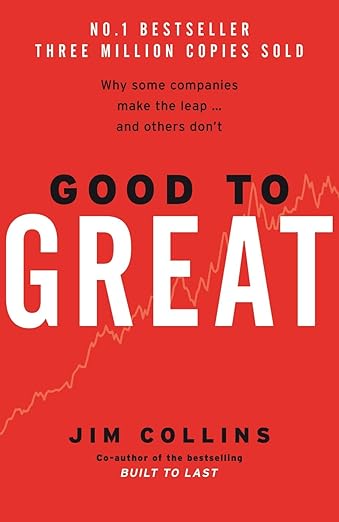


Good to Great
Jim Collins
Good to Great by Jim Collins – Book Overview
Good to Great by Jim Collins explores why some organisations achieve sustained excellence while others remain average or decline, despite operating in similar markets with comparable resources. Rather than focusing on inspirational leadership or short-term tactics, the book examines the disciplined thinking, behaviours, and systems that enable long-term performance.
Based on a rigorous multi-year research study, Collins and his team analysed companies that made the leap from good performance to great results and sustained those results over time. What they found challenged many popular assumptions about leadership, strategy, and transformation. Greatness, they concluded, is rarely the result of dramatic change. Instead, it is built through consistency, clarity, and disciplined execution.
For leaders and professionals focused on sustainable performance rather than quick wins, Good to Great provides a grounded framework for building organisations, teams, and careers that endure.
What Is Good to Great About?
The Core Idea Explained Simply
The core idea of Good to Great is that long-term excellence is achieved through discipline rather than intensity. Collins argues that organisations become great not by chasing bold visions or radical change, but by applying disciplined people, disciplined thought, and disciplined action over time.
Rather than attempting to motivate people into greatness, great organisations focus on creating clarity around priorities and standards. They avoid distractions, resist unnecessary complexity, and commit to doing a small number of things exceptionally well.
This approach reframes success as a process of steady improvement. Progress may appear slow at first, but disciplined execution compounds into sustained performance.
Who This Book Is For
- Senior leaders responsible for long-term organisational results
- Managers seeking consistency rather than peaks and troughs
- Business owners building organisations for endurance
- Professionals aiming to improve disciplined personal performance
Key Principles from Good to Great
The Main Ideas or Frameworks
One of the most influential concepts in Good to Great is Level 5 Leadership. Collins found that the most successful leaders combined deep personal humility with strong professional will. These leaders focused on organisational success rather than personal recognition.
Another core framework is the Hedgehog Concept. This encourages organisations to identify the intersection between what they can be best at, what drives their economic engine, and what they are deeply committed to. Clarity in this area prevents distraction and misaligned effort.
The book also emphasises the importance of confronting brutal facts. Great organisations face reality honestly while maintaining confidence in their long-term direction.
Why These Ideas Matter in Practice
These principles matter because they reduce noise and confusion. When priorities are clear and standards are consistent, decision-making becomes simpler and execution improves.
In practice, disciplined thinking prevents overreaction to short-term pressure. Teams are less likely to chase trends or abandon strategy when performance fluctuates.
Over time, this consistency strengthens accountability and trust, creating a stable foundation for growth.
How Good to Great Applies to Business & Performance
Application in Leadership and Teams
In leadership contexts, Good to Great reinforces the importance of responsibility, humility, and consistency. Effective leaders focus on building strong teams and systems rather than relying on charisma or authority.
This philosophy closely aligns with the long-term thinking explored in Built to Last, where values, discipline, and alignment underpin enduring success.
When leaders apply these principles consistently, teams experience clearer expectations, stronger accountability, and greater confidence in decision-making.
Application in Personal Performance and Discipline
At an individual level, the book encourages professionals to focus on disciplined effort rather than scattered ambition. Progress comes from applying consistent standards to daily work.
This complements clarity-driven approaches such as The One Thing, where focus on priorities improves execution quality.
By adopting disciplined habits, individuals build reliability and credibility over time.
Practical Examples and Real-World Application
Building Habits or Skills in a Business Environment
Good to Great highlights how great organisations rely on disciplined processes rather than heroic effort. Performance is built through routines that reinforce standards consistently.
In practice, this means clear role expectations, honest performance reviews, and systems that support accountability rather than workaround culture.
These habits compound into operational stability and stronger results.
Overcoming Common Challenges in Practice
A common challenge is impatience. Leaders often expect transformation to be fast and visible.
Good to Great emphasises patience and persistence. Progress may feel incremental, but disciplined action produces durable improvement.
This mindset helps organisations stay focused during uncertainty and avoid unnecessary course correction.
Strengths and Limitations of Good to Great
What the Book Does Well
The book’s greatest strength is its research depth. The conclusions are based on long-term comparative data rather than opinion or trend.
Its emphasis on discipline, clarity, and leadership humility provides a strong foundation for sustainable performance.
Where It May Fall Short or Need Supplementing
Some critics note that external market changes are not fully accounted for in every case study.
Pairing Good to Great with more contemporary strategy perspectives such as Good Strategy Bad Strategy helps balance principles with modern context.
How Good to Great Compares to Similar Books
Compared to Built to Last, Good to Great focuses more on performance transition than enduring values. Compared to The One Thing, it applies disciplined focus at an organisational rather than individual level.
Why Business Coaches Recommend Good to Great
Business coaches recommend Good to Great because it shifts attention away from motivation and towards discipline. Sustainable performance is built through clarity, consistency, and accountability.
The research-led insights developed by Jim Collins help leaders avoid short-term thinking and focus on systems that support long-term results.
When applied thoughtfully, the principles support calmer leadership, clearer decision-making, and more reliable execution.
Should You Read Good to Great?
Quick Decision Summary
- Read it if you want to build disciplined, sustainable performance.
- Skip it if you are looking for quick wins or motivational tactics.
Good to Great – Frequently Asked Questions
What is Good to Great really about?
Good to Great explains how organisations achieve sustained excellence through disciplined leadership, clarity of focus, and consistent execution. It shows that greatness is built through steady behaviour rather than dramatic change.
Is Good to Great relevant today?
Yes. While some examples are historical, the principles of discipline, accountability, and focus remain highly relevant in modern organisations.
What is Level 5 Leadership?
Level 5 Leadership describes leaders who combine humility with strong professional will. These leaders prioritise organisational success over personal recognition.
Does the book focus on strategy?
The book focuses more on disciplined thinking and execution than traditional strategic planning.
Can individuals apply Good to Great principles?
Yes. Individuals can apply disciplined focus, honest self-assessment, and consistent effort to their own performance.
Is Good to Great evidence-based?
Yes. The book is grounded in extensive long-term research across multiple organisations.
Good to Great – Key Takeaways
- Greatness is built through discipline, not intensity.
- Clarity and focus support sustained performance.
- Leadership humility strengthens organisations.
- Honest assessment improves decision-making.
- Consistency compounds into long-term success.