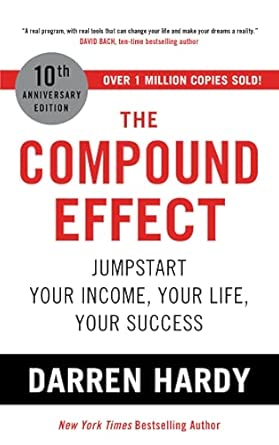


The Compound Effect
Home - Darren Hardy
The Compound Effect by Darren Hardy – Book Overview
The Compound Effect by Darren Hardy focuses on the idea that small, consistent actions taken over time create significant and lasting results. Rather than promoting dramatic change or quick wins, the book explains how everyday choices, habits, and behaviours quietly shape long-term success in business, leadership, and personal performance.
Darren Hardy argues that most people overestimate what they can achieve in the short term and underestimate what they can achieve through consistency. The book challenges the temptation to look for shortcuts and instead makes the case for discipline, patience, and personal responsibility as the true drivers of sustained performance.
The Compound Effect is especially relevant for professionals who want reliable progress rather than bursts of motivation. It positions success as something earned through daily standards and decisions rather than luck or talent.
What Is The Compound Effect About?
The Core Idea Explained Simply
At its core, The Compound Effect is about cause and effect. Darren Hardy explains that every decision, no matter how small, carries consequences that accumulate over time. These consequences are often invisible in the short term, which is why people underestimate their impact. However, when choices are repeated consistently, they compound into powerful results.
The book argues that success rarely comes from a single breakthrough moment. Instead, it is the outcome of thousands of small decisions made consistently in the same direction. These decisions might include how time is used, how effort is applied, how habits are formed, and how standards are maintained when no one is watching.
Hardy introduces the idea that people often abandon good habits because they do not see immediate rewards. Conversely, poor habits persist because their negative impact is delayed. The compound effect explains why discipline feels unrewarding early on but becomes transformative over time.
A key theme of the book is personal responsibility. Hardy emphasises that individuals are always responsible for their results, whether consciously or unconsciously. Blaming circumstances, markets, or other people distracts from the small choices that actually drive outcomes.
The book also highlights the danger of inconsistency. Sporadic effort, even when intense, does not compound effectively. Consistent effort, even when modest, produces far greater long-term results. This applies equally to performance, health, leadership credibility, and personal development.
Hardy further explains that success compounds through momentum. As habits improve, confidence increases, energy improves, and standards rise. This creates a reinforcing loop where progress becomes easier to sustain.
Importantly, The Compound Effect is not about perfection. It is about direction. Small improvements applied consistently in the right direction eventually outweigh occasional mistakes or setbacks.
Who This Book Is For
This book is highly relevant for business leaders, entrepreneurs, sales professionals, and individuals responsible for long-term results rather than short-term activity.
It is particularly valuable for people who feel capable but frustrated by a lack of visible progress, or who struggle with consistency rather than effort.
The book also suits individuals seeking to improve personal discipline, accountability, and focus without relying on motivation alone.
Key Principles from The Compound Effect
The Main Ideas or Frameworks
The book centres on a few core principles: personal responsibility, consistency, momentum, and accountability.
Hardy emphasises tracking behaviour, setting clear standards, and eliminating excuses as foundational practices.
Why These Ideas Matter in Practice
These ideas matter because many performance issues stem from inconsistency rather than lack of knowledge.
In practice, applying small disciplines daily produces more reliable results than occasional intensity.
How The Compound Effect Applies to Business & Performance
Application in Leadership and Teams
In leadership contexts, the book highlights how standards are built through repetition. Leaders who consistently model behaviour set expectations more effectively than those who rely on speeches or policies.
This approach aligns closely with the accountability-driven leadership described in Extreme Ownership.
Teams improve when expectations are reinforced daily.
Application in Personal Performance and Discipline
At an individual level, The Compound Effect reframes discipline as a daily practice rather than a personality trait.
This complements the habit-based thinking in Atomic Habits.
Consistency becomes the primary performance lever.
Practical Examples and Real-World Application
Building Momentum Through Small Wins
Individuals apply the compound effect by tracking behaviours, setting non-negotiable routines, and reviewing progress regularly.
Over time, these practices build momentum.
Overcoming Common Consistency Challenges
A common challenge is boredom or impatience.
The book encourages focusing on process rather than outcome.
Strengths and Limitations of The Compound Effect
What the Book Does Well
The book is clear, direct, and practical.
Its emphasis on responsibility resonates strongly in performance-driven environments.
Where It May Fall Short or Need Supplementing
The book focuses more on behaviour than strategy.
Pairing it with strategic clarity such as Good Strategy Bad Strategy strengthens application.
How The Compound Effect Compares to Similar Books
Compared to Atomic Habits, this book places more emphasis on accountability. Compared to Grit, it focuses more on process than perseverance.
Why Business Coaches Recommend The Compound Effect
Business coaches recommend this book because sustained performance depends on daily discipline.
The work shared by Darren Hardy reinforces the value of consistency.
Should You Read The Compound Effect?
Quick Decision Summary
This book is ideal for individuals seeking reliable progress through discipline.
The Compound Effect – Frequently Asked Questions
What is The Compound Effect really about?
The book explains how small daily choices accumulate into long-term success or failure.
Is this book suitable for leaders?
Yes. Leaders influence results through daily standards.
Does it focus on habits?
Yes. Habits are central to the compound effect.
Is the book practical?
Yes. It focuses on applied discipline.
Can it improve performance?
Yes. Consistency improves outcomes.
Is motivation required?
No. Discipline matters more than motivation.
The Compound Effect – Key Takeaways
- Small actions compound over time.
- Consistency beats intensity.
- Discipline drives momentum.
- Standards shape outcomes.
- Success is earned daily.