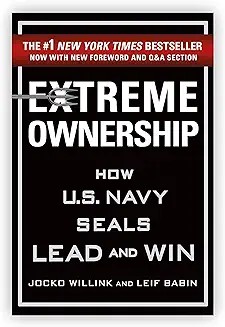


Extreme Ownership
Jocko Willink Biography & Resources | Jocko.com
Extreme Ownership by Jocko Willink & Leif Babin – Book Overview
Extreme Ownership by Jocko Willink & Leif Babin sets out a clear and uncompromising philosophy of leadership rooted in responsibility, accountability, and disciplined execution. Drawing on their experience as U.S. Navy SEAL officers, the authors argue that leadership success or failure always rests with the leader, regardless of circumstances, external pressure, or the performance of others.
The book challenges a common instinct in organisations: the tendency to explain poor results through excuses, complexity, or factors beyond control. Instead, it introduces the idea that effective leadership begins by taking full ownership of outcomes. When leaders accept responsibility without deflection, they gain the clarity and credibility required to improve systems, raise standards, and strengthen performance.
Although the examples originate in military operations, the principles translate directly to business, leadership, and personal performance. Extreme Ownership is not about control or authority, but about creating alignment, clarity, and consistency through disciplined leadership behaviour.
What Is Extreme Ownership About?
The Core Idea Explained Simply
The central idea of Extreme Ownership is that leaders must take responsibility for everything that happens within their area of influence. When performance falls short, the leader does not blame people, processes, or conditions. Instead, they ask what they could have done differently to prepare, communicate, support, or lead more effectively.
This approach reframes leadership as an act of service rather than command. Ownership creates trust because teams can see that leaders are willing to stand behind decisions and outcomes. Over time, this consistency strengthens credibility and improves execution.
Extreme ownership is presented as a discipline rather than a mindset adopted only in moments of crisis. The book emphasises that leadership effectiveness is built through daily behaviour, not isolated acts of intensity.
Who This Book Is For
This book is particularly relevant for leaders and professionals operating in environments where accountability, clarity, and execution matter. It is suited to individuals who recognise that performance issues often stem from leadership decisions rather than capability gaps.
It is especially useful for managers responsible for teams, projects, or outcomes where ambiguity, misalignment, or inconsistent standards undermine results.
Key Principles from Extreme Ownership
The Main Ideas or Frameworks
The defining principle of the book is extreme ownership itself. Leaders take full responsibility for outcomes, even when factors appear outside their control. This does not mean accepting blame unnecessarily, but recognising that leaders always have influence over preparation, communication, and execution.
Another core framework is prioritisation and execution. Leaders must assess situations calmly, identify the most important task, and communicate priorities clearly. This prevents overload and confusion, particularly under pressure.
The book also introduces decentralised command. Rather than micromanaging, leaders empower teams with clear intent and trust them to execute. This balance maintains accountability while enabling speed and adaptability.
Why These Ideas Matter in Practice
These ideas matter because unclear responsibility creates hesitation, blame, and delay. When ownership is ambiguous, problems linger and performance suffers.
In practice, extreme ownership accelerates improvement. Leaders focus on fixing systems rather than defending positions. Teams become more confident because expectations are clear and support is consistent.
Over time, this discipline creates a culture where accountability is normalised rather than avoided.
How Extreme Ownership Applies to Business & Performance
Application in Leadership and Teams
In business environments, extreme ownership encourages leaders to examine their own decisions before questioning team capability. This includes how objectives are set, how information is shared, and how feedback is delivered.
This leadership approach aligns with the disciplined thinking explored in Good to Great, where responsibility, consistency, and clarity underpin long-term performance.
When leaders consistently own outcomes, teams respond with higher trust, stronger engagement, and improved execution.
Application in Personal Performance and Discipline
At an individual level, extreme ownership removes excuses. Professionals take responsibility for preparation, time management, learning, and follow-through.
This clarity complements focus-driven approaches such as The One Thing, where disciplined prioritisation improves effectiveness.
As a result, individuals become more reliable, self-directed, and consistent in their performance.
Practical Examples and Real-World Application
Building Habits or Skills in a Business Environment
Applying extreme ownership in everyday business contexts often begins with communication. Leaders ensure goals are understood, roles are clear, and standards are explicit.
Regular review and reflection allow leaders to identify gaps in guidance, resources, or training before performance declines.
This disciplined approach strengthens execution without increasing control or bureaucracy.
Overcoming Common Challenges in Practice
A common challenge is misinterpreting ownership as self-criticism. Extreme ownership is not about internalising failure, but about improving influence.
When applied constructively, ownership empowers leaders to refine systems and behaviours rather than absorb blame.
This balance supports resilience, learning, and sustained performance.
Strengths and Limitations of Extreme Ownership
What the Book Does Well
The book’s greatest strength is clarity. Its principles are direct, memorable, and easy to apply across leadership contexts.
By emphasising responsibility over authority, the book provides a strong foundation for trust-based leadership.
Where It May Fall Short or Need Supplementing
Some readers may apply the message too rigidly, risking over-control or burnout. Without balance, ownership can become self-imposed pressure rather than leadership clarity.
Pairing this book with reflective approaches such as Emotional Intelligence helps balance accountability with awareness and judgement.
How Extreme Ownership Compares to Similar Books
Compared to Good to Great, Extreme Ownership focuses more on individual leadership behaviour than organisational systems. Compared to The One Thing, it applies prioritisation within a broader leadership responsibility framework.
These perspectives complement rather than compete, offering a rounded view of disciplined performance.
Why Business Coaches Recommend Extreme Ownership
Business coaches frequently recommend Extreme Ownership because many performance issues stem from unclear responsibility rather than lack of skill or effort.
The leadership philosophy taught by Jocko Willink reinforces clarity, accountability, and disciplined execution, particularly under pressure.
When applied with judgement, the principles support calm leadership, faster learning, and more reliable outcomes.
Should You Read Extreme Ownership?
Quick Decision Summary
This book is well suited to leaders who want to improve accountability, consistency, and execution. It is particularly valuable for those prepared to examine their own leadership behaviour honestly.
It may be less suitable for readers seeking purely theoretical or academic leadership models.
Extreme Ownership – Frequently Asked Questions
What is Extreme Ownership really about?
Extreme Ownership is about leaders taking full responsibility for outcomes rather than deflecting blame. It explains how ownership improves clarity, trust, and execution. Applied consistently, the principles help leaders influence performance more effectively under pressure and uncertainty.
Is Extreme Ownership relevant outside the military?
Yes. Although the examples come from military operations, the principles apply directly to business, leadership, and personal performance. Responsibility, clarity, and disciplined execution are universal leadership requirements.
Does the book encourage micromanagement?
No. The book promotes decentralised command, where leaders set clear intent and trust teams to execute. Ownership improves autonomy rather than restricting it.
Can Extreme Ownership improve team culture?
Yes. Clear responsibility reduces blame, improves trust, and encourages learning. Teams perform better when accountability is consistent and fair.
Is Extreme Ownership suitable for new leaders?
Yes. The principles are simple and practical, making them accessible to emerging leaders who want to establish credibility early.
Is the book evidence-based?
The book is experiential rather than academic, drawing on operational leadership experience rather than formal research.
Extreme Ownership – Key Takeaways
- Leaders are responsible for outcomes.
- Clarity improves execution.
- Ownership builds trust.
- Discipline supports consistency.
- Sustainable performance begins with accountability.