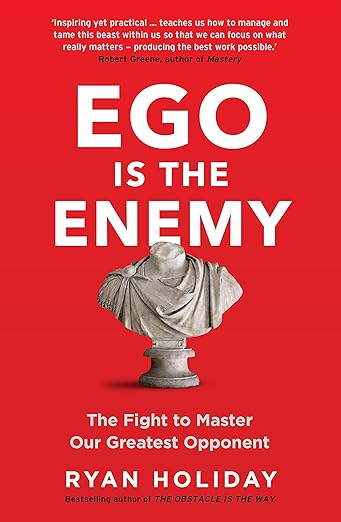


Ego Is the Enemy
Home - RyanHoliday.net
Ego Is the Enemy by Ryan Holiday – Book Overview
Ego Is the Enemy by Ryan Holiday explores one of the most persistent and damaging barriers to performance, leadership, and growth: unchecked ego. Drawing on Stoic philosophy, historical examples, and modern case studies, the book examines how ego quietly undermines progress at every stage of success, from ambition and early achievement through to failure and long-term leadership.
The book challenges the assumption that confidence and self-belief alone drive success. Instead, Holiday argues that ego distorts perception, weakens judgement, and creates blind spots that ultimately limit performance. When ego dominates thinking, people prioritise image over substance, validation over learning, and recognition over contribution.
Ego Is the Enemy is particularly relevant in professional and leadership environments where pressure, status, and visibility can amplify ego-driven behaviour. The book offers a disciplined, grounded framework for maintaining humility, focus, and self-awareness while pursuing high performance.
What Is Ego Is the Enemy About?
The Core Idea Explained Simply
The core idea of Ego Is the Enemy is that ego interferes with learning, execution, and leadership at every stage of a career. Ryan Holiday defines ego not as healthy confidence, but as an inflated sense of self-importance that prioritises being right, being admired, or being seen over doing the work required to improve.
Holiday structures the book around three stages where ego causes the most damage: aspiration, success, and failure. During aspiration, ego leads people to believe they deserve success before earning it. It encourages shortcuts, entitlement, and impatience, distracting from the disciplined effort required to build capability.
During success, ego becomes even more dangerous. Recognition, praise, and authority can reinforce the belief that past success guarantees future results. This leads to complacency, resistance to feedback, and overconfidence. Leaders stop listening, stop questioning assumptions, and stop learning. Performance stagnates while risk increases.
In failure, ego prevents recovery. Instead of reflecting honestly, people protect identity, blame external factors, or withdraw. Ego turns setbacks into personal threats rather than opportunities for learning. As a result, mistakes are repeated rather than corrected.
The book repeatedly emphasises humility as a performance discipline. Humility allows individuals to separate identity from outcomes, remain open to feedback, and focus on progress rather than recognition. This does not mean lacking ambition. Instead, it means directing ambition toward mastery, contribution, and long-term improvement.
Holiday also highlights the importance of self-control and restraint. Many ego-driven failures occur not because people lack ability, but because they overestimate themselves, underestimate challenges, or act prematurely. By slowing down, observing carefully, and committing to the work, individuals improve judgement and execution.
Ego Is the Enemy ultimately reframes success as the result of quiet, consistent effort rather than visible self-promotion. It encourages readers to focus on process, learning, and contribution rather than status or external validation.
Who This Book Is For
This book is highly relevant for leaders, entrepreneurs, and professionals operating in competitive or high-visibility environments. It is particularly valuable for individuals experiencing rapid success, promotion, or recognition, where ego-related risks increase.
Ego Is the Enemy is also useful for people navigating setbacks or transitions. Its emphasis on reflection, discipline, and learning supports resilience and long-term performance.
Readers interested in leadership maturity, emotional control, and sustainable success will find the book practical and grounded.
Key Principles from Ego Is the Enemy
The Main Ideas or Frameworks
The book draws heavily on Stoic philosophy, emphasising self-awareness, discipline, and focus on what can be controlled. Key ideas include separating identity from achievement, embracing humility, and committing to continual learning.
Another central principle is directing attention away from recognition and toward effort, preparation, and contribution.
Why These Ideas Matter in Practice
These ideas matter because ego distorts judgement.
In practice, humility improves learning, decision-making, and leadership effectiveness.
How Ego Is the Enemy Applies to Business & Performance
Application in Leadership and Teams
In leadership contexts, ego often shows up as defensiveness, control, or unwillingness to listen. Ego Is the Enemy challenges leaders to create environments where feedback is welcomed and learning is prioritised.
This focus on ownership and responsibility aligns closely with the leadership discipline explored in Extreme Ownership, where leaders take full responsibility for outcomes.
Teams led with humility tend to perform better because trust, accountability, and clarity increase.
Application in Personal Performance and Discipline
At an individual level, the book encourages professionals to focus on process rather than status. Ego-driven behaviour often leads to overcommitment, distraction, and burnout.
This disciplined focus complements the clarity-first approach described in Essentialism.
Practical Examples and Real-World Application
Maintaining Discipline During Success
One practical application is building routines that reinforce learning and reflection even when things are going well. Regular feedback, review, and humility checks prevent complacency.
Leaders who institutionalise reflection maintain performance over time.
Recovering Constructively from Failure
When setbacks occur, Ego Is the Enemy encourages analysis rather than defensiveness.
This supports resilience and continuous improvement.
Strengths and Limitations of Ego Is the Enemy
What the Book Does Well
The book excels in clarity and relevance. Its principles apply across industries and career stages.
Historical examples reinforce the message effectively.
Where It May Fall Short or Need Supplementing
The book focuses more on mindset than systems.
Pairing it with performance frameworks such as Atomic Habits supports behaviour change.
How Ego Is the Enemy Compares to Similar Books
Compared to motivational books, Ego Is the Enemy is more reflective and disciplined. Compared to mindset-focused texts, it emphasises restraint over optimism.
Why Business Coaches Recommend Ego Is the Enemy
Business coaches recommend Ego Is the Enemy because sustainable performance requires emotional discipline.
The work associated with Ryan Holiday reinforces humility as a leadership strength.
Should You Read Ego Is the Enemy?
Quick Decision Summary
This book is ideal for professionals who want to sustain performance without being derailed by ego.
Ego Is the Enemy – Frequently Asked Questions
What is Ego Is the Enemy really about?
The book explains how ego undermines learning, judgement, and leadership, and how humility supports long-term success.
Is this book practical?
Yes. Its principles apply directly to leadership behaviour and personal discipline.
Does the book discourage ambition?
No. It encourages disciplined, grounded ambition.
Is this relevant for leaders?
Yes. Ego-related failures are common in leadership roles.
Does it help with failure?
Yes. It reframes failure as an opportunity to learn.
Is the book easy to read?
Yes. The language is clear and accessible.
Ego Is the Enemy – Key Takeaways
- Ego distorts judgement.
- Humility supports learning.
- Process matters more than recognition.
- Restraint improves performance.
- Long-term success requires discipline.