

Essentialism
Greg McKeown - Essentialism Advocate | Inspirational Speaker | Bestselling Author
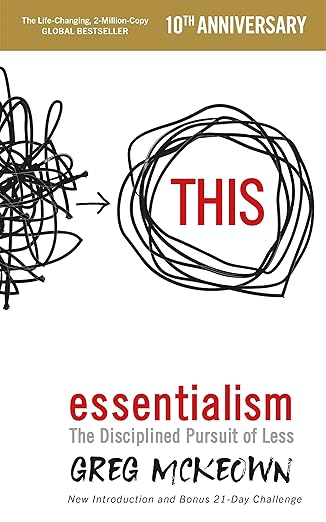
Essentialism by Greg McKeown – Book Overview
Essentialism by Greg McKeown is a disciplined examination of how individuals and organisations can achieve better results by doing less, but doing it better. The book challenges the modern assumption that success comes from being busy, responsive, and constantly available. Instead, it argues that sustained performance, clarity, and effectiveness are the result of deliberate choice, focus, and the courage to eliminate what does not truly matter.
In many professional environments, people are rewarded for saying yes, taking on more, and demonstrating effort through volume rather than impact. Essentialism confronts this reality directly, arguing that this behaviour leads to overload, diluted performance, and chronic stress. McKeown reframes productivity as a leadership and decision-making issue, not a time-management problem, and positions clarity as the foundation of sustainable performance.
The book is particularly relevant for leaders, professionals, and teams who feel stretched thin despite working hard, and who sense that their effort is not translating into meaningful progress.
What Is Essentialism About?
The Core Idea Explained Simply
The core idea of Essentialism is that only a small number of activities truly drive meaningful results, yet most people spend their time reacting to what is urgent rather than committing to what is important. Greg McKeown argues that when individuals fail to choose deliberately, they allow external demands, expectations, and pressures to dictate their priorities. Over time, this leads to a loss of control, reduced effectiveness, and a constant feeling of being busy without making progress.
Essentialism begins with a mindset shift. Non-essentialists believe they can do everything if they just work harder, manage their time better, or become more efficient. Essentialists accept that trade-offs are unavoidable. Choosing to prioritise one thing always means choosing not to prioritise something else. The difference is that essentialists make these decisions consciously, while non-essentialists allow them to happen by default.
The book introduces a systematic approach built around three stages: explore, eliminate, and execute. Exploration involves stepping back from activity to assess what truly matters. This requires space for thinking, reflection, and evaluation rather than constant action. Without exploration, people confuse motion with progress and activity with achievement.
Elimination is the most challenging stage. It requires saying no to good opportunities in order to protect the best ones. McKeown explains that many people struggle here because saying no feels uncomfortable, risky, or politically difficult. However, every unconsidered yes dilutes focus and increases pressure elsewhere. Over time, these small compromises accumulate into overload.
Execution focuses on making essential work easier to complete. Rather than relying on willpower, essentialists design systems, routines, and boundaries that support consistent action. This includes removing obstacles, simplifying processes, and protecting time for what matters most. Execution, in this sense, is not about effort but about design.
A recurring theme throughout the book is clarity. When priorities are clear, decisions become simpler, stress reduces, and performance improves. When priorities are unclear, even highly capable people struggle to deliver results. Essentialism positions clarity not as a luxury, but as a professional responsibility.
Ultimately, Essentialism reframes success as a function of intentional design rather than relentless effort. It argues that doing fewer things exceptionally well produces far greater impact than doing many things adequately.
Who This Book Is For
This book is highly relevant for leaders, managers, and professionals who operate in complex environments with competing demands. It is particularly valuable for those in senior roles where expectations expand continuously and where saying yes has become the default response.
Essentialism is also well suited to individuals responsible for setting direction for teams. Leaders who struggle with alignment, prioritisation, or overload will find the book’s principles immediately applicable to decision-making, delegation, and communication.
Beyond leadership roles, the book is valuable for anyone seeking to regain control of their time, energy, and attention without lowering ambition or disengaging from responsibility. It provides a framework for making deliberate choices rather than reacting to pressure.
Key Principles from Essentialism
The Main Ideas or Frameworks
The book is built around the disciplined pursuit of less. Key principles include selective focus, deliberate trade-offs, and the elimination of non-essential work. McKeown emphasises that clarity must come before action, and that effort applied in the wrong direction produces diminishing returns.
Why These Ideas Matter in Practice
These ideas matter because overload is a common cause of underperformance. In practice, individuals and organisations that reduce competing priorities execute more consistently, make better decisions, and sustain performance over time.
How Essentialism Applies to Business & Performance
Application in Leadership and Teams
In leadership contexts, Essentialism encourages leaders to simplify rather than add. Clear priorities reduce confusion, conflict, and wasted effort. Leaders who practise essentialism protect focus and model disciplined decision-making.
This aligns closely with the clarity-driven performance principles described in High Performance: The Quiet Work That Changes Everything, where sustainable performance is built through standards, clarity, and accountability.
Application in Personal Performance and Discipline
At an individual level, Essentialism reframes discipline as a series of deliberate choices rather than constant self-control. This complements the focus-based approach explored in The One Thing, reinforcing the idea that prioritisation is a performance skill.
Practical Examples and Real-World Application
Eliminating Non-Essential Work
Organisations apply essentialism by reducing unnecessary meetings, clarifying roles, and limiting the number of active priorities. Individuals apply it by setting boundaries, declining low-impact commitments, and protecting time for essential work.
Overcoming Overcommitment
A common challenge is fear of disappointing others. Essentialism reframes saying no as a strategic decision that protects long-term performance rather than a personal rejection.
Strengths and Limitations of Essentialism
What the Book Does Well
The book provides a clear, disciplined framework for focus and decision-making. Its emphasis on choice and trade-offs resonates strongly with leaders under pressure.
Where It May Fall Short or Need Supplementing
The book focuses more on clarity than measurement. Pairing it with execution frameworks such as Measure What Matters strengthens accountability.
How Essentialism Compares to Similar Books
Compared to The One Thing, Essentialism places greater emphasis on elimination. Compared to Deep Work, it focuses more on priorities than attention alone.
Why Business Coaches Recommend Essentialism
Business coaches recommend Essentialism because clarity is foundational to performance. The work associated with Greg McKeown reinforces the importance of disciplined choice.
Should You Read Essentialism?
Quick Decision Summary
This book is ideal for leaders and professionals seeking clarity, control, and sustainable performance.
Essentialism – Frequently Asked Questions
What is Essentialism really about?
Essentialism is about identifying what truly matters and eliminating everything else so effort produces meaningful results rather than constant activity.
Is Essentialism practical?
Yes. It provides clear principles for decision-making, prioritisation, and boundary-setting.
Does Essentialism apply to leaders?
Yes. Leaders must choose priorities deliberately to protect performance.
Is Essentialism about doing less work?
No. It is about doing the right work exceptionally well.
Can Essentialism reduce burnout?
Yes. Clarity reduces overload and unnecessary pressure.
Is Essentialism suitable for teams?
Yes. Teams perform better with clear priorities and reduced noise.
Essentialism – Key Takeaways
- Less but better drives impact.
- Clarity precedes performance.
- Trade-offs are unavoidable.
- Focus must be protected.
- Choice determines results.