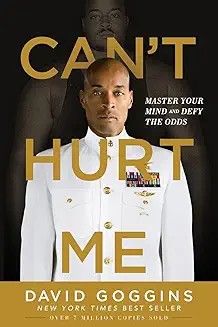


Can't Hurt Me
David Goggins
Can’t Hurt Me by David Goggins – Book Overview
Can’t Hurt Me by David Goggins is a raw and uncompromising exploration of mental resilience, personal accountability, and sustained performance under pressure. Rather than offering comfort or reassurance, the book challenges readers to confront discomfort, take responsibility for their outcomes, and expand what they believe they are capable of achieving.
Goggins’ story moves from a childhood marked by abuse, obesity, and self-doubt to elite military service and extreme endurance performance. However, the book is not intended as inspiration alone. Its central message is that lasting strength is built through deliberate exposure to difficulty, disciplined habits, and an honest assessment of personal limitations.
For leaders, professionals, and individuals operating in demanding environments, Can’t Hurt Me offers a stark but valuable perspective on how resilience, consistency, and ownership underpin sustainable performance.
What Is Can’t Hurt Me About?
The Core Idea Explained Simply
The core idea of Can’t Hurt Me is that most people live far below their true capacity because they avoid discomfort and responsibility. Goggins argues that growth occurs only when individuals repeatedly push beyond perceived limits and learn to tolerate difficulty.
Central to this idea is the concept of the “calloused mind”. Just as physical calluses form through repeated friction, mental resilience is built through repeated exposure to challenge. Each difficult experience strengthens tolerance, discipline, and confidence.
This reframing positions adversity as a training ground rather than a barrier. Instead of avoiding hardship, readers are encouraged to use it deliberately to build capability and self-belief.
Who This Book Is For
- Leaders operating in high-pressure or high-accountability roles
- Professionals seeking greater discipline and consistency
- Individuals struggling with self-belief or avoidance behaviours
- Anyone prepared to confront discomfort to improve performance
Key Principles from Can’t Hurt Me
The Main Ideas or Frameworks
One of the book’s central principles is radical ownership. Goggins insists that progress begins only when individuals take full responsibility for their circumstances, choices, and results, regardless of background or challenge.
Another key framework is the “accountability mirror”. This practice involves confronting personal shortcomings honestly and regularly, without excuses or external blame. By doing so, individuals build self-awareness and raise personal standards.
The book also emphasises deliberate discomfort. By repeatedly choosing challenging tasks, individuals expand their capacity for effort, focus, and resilience.
Why These Ideas Matter in Practice
These ideas matter because they remove dependence on motivation. Motivation fluctuates, but ownership and discipline create reliability.
In practical settings, this mindset reduces reactivity. Individuals become more consistent in preparation, execution, and follow-through, even when conditions are difficult.
Over time, this builds trust, credibility, and performance resilience.
How Can’t Hurt Me Applies to Business & Performance
Application in Leadership and Teams
In leadership contexts, Can’t Hurt Me reinforces the importance of accountability. Leaders who take responsibility for outcomes, culture, and standards set a clear tone for performance.
This principle closely aligns with Extreme Ownership, where leadership effectiveness is rooted in responsibility rather than authority.
When leaders model discipline and ownership, teams are more likely to adopt the same standards, strengthening trust and execution.
Application in Personal Performance and Discipline
At an individual level, the book challenges comfort-driven behaviour. Goggins argues that avoiding discomfort reinforces weakness, while controlled exposure to challenge builds confidence.
This complements habit-based approaches such as Atomic Habits, where consistency is developed through deliberate systems rather than emotional motivation.
Together, these ideas support long-term discipline and dependable performance.
Practical Examples and Real-World Application
Building Habits or Skills in a Business Environment
In professional environments, applying Goggins’ principles does not require extreme behaviour. Instead, it involves consistently doing necessary but uncomfortable tasks such as preparation, feedback, difficult conversations, or disciplined follow-through.
By treating discipline as a daily practice rather than an occasional effort, professionals raise their baseline performance.
This mirrors themes found in The Compound Effect, where small, repeated actions drive long-term results.
Overcoming Common Challenges in Practice
A common challenge is misinterpreting intensity as sustainability. Can’t Hurt Me is not an argument for constant strain, but for deliberate exposure to difficulty.
When paired with recovery, reflection, and learning, controlled challenge strengthens resilience rather than causing burnout.
This balance is essential for maintaining performance over time.
Strengths and Limitations of Can’t Hurt Me
What the Book Does Well
The book’s greatest strength is its honesty. Goggins does not soften the realities of discipline or responsibility.
Its message is clear: progress requires effort, ownership, and consistency, even when conditions are uncomfortable.
Where It May Fall Short or Need Supplementing
Some readers may find the tone extreme. Without context, the message can be misapplied as constant intensity.
Pairing this book with reflective frameworks such as Mindset helps balance toughness with learning and adaptability.
How Can’t Hurt Me Compares to Similar Books
Compared to Atomic Habits, Can’t Hurt Me focuses more on mental resilience than behavioural systems. Compared to Mindset, it prioritises toughness and exposure to challenge over learning orientation.
Why Business Coaches Recommend Can’t Hurt Me
Business coaches recommend Can’t Hurt Me because performance often breaks down under pressure rather than complexity.
The principles promoted by David Goggins reinforce ownership, discipline, and resilience, which are critical for consistent execution in demanding environments.
Should You Read Can’t Hurt Me?
Quick Decision Summary
- Read it if you want to build resilience, discipline, and personal accountability.
- Skip it if you prefer reflective or purely analytical approaches.
Can’t Hurt Me – Frequently Asked Questions
What is Can’t Hurt Me really about?
Can’t Hurt Me is about developing mental resilience through ownership and disciplined exposure to challenge. It explains how discomfort strengthens capacity and confidence over time. Applied correctly, the ideas help individuals perform consistently under pressure rather than relying on motivation.
Is Can’t Hurt Me relevant for business leaders?
Yes. Business leaders benefit from its emphasis on responsibility and resilience. The book helps leaders remain composed, disciplined, and accountable when facing pressure, uncertainty, or setbacks.
Does the book promote extreme behaviour?
While intense in tone, the principles focus on controlled challenge rather than recklessness. When applied responsibly, the ideas support sustainable growth rather than burnout.
Can this book improve consistency?
Yes. By reducing reliance on motivation and increasing discipline, many readers become more consistent in preparation and execution.
Is Can’t Hurt Me suitable for beginners?
The book is accessible but demanding. Beginners may benefit from applying the ideas gradually rather than all at once.
Is the book evidence-based?
The book is experiential rather than academic, drawing on real-world experience rather than formal research.
Can’t Hurt Me – Key Takeaways
- Discomfort builds resilience and capacity.
- Ownership strengthens trust and consistency.
- Discipline outperforms motivation.
- Repeated effort expands perceived limits.
- Sustainable performance requires responsibility.