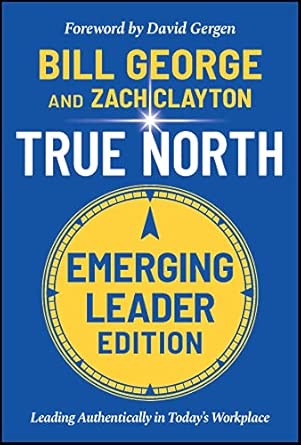


True North
About - Bill George
True North by Bill George – Book Overview
True North by Bill George is a definitive exploration of authentic leadership and the inner work required to lead with clarity, integrity, and consistency over time. Rather than presenting leadership as a collection of skills or techniques to be learned, the book focuses on the deeper foundations that shape how leaders think, behave, and make decisions when under pressure.
Bill George argues that leadership failure rarely stems from a lack of intelligence or experience. Instead, it most often arises from a lack of self-awareness, misaligned values, or the absence of a clear internal compass. When leaders are unclear about who they are and what they stand for, their behaviour becomes reactive, inconsistent, and vulnerable to external pressure.
Drawing on interviews with senior executives, entrepreneurs, and public leaders, True North connects personal experience with leadership responsibility. The book positions leadership as a lifelong journey rather than a role or title, emphasising that credibility and trust are earned through consistent behaviour over time.
What Is True North About?
The Core Idea Explained Simply
At its core, True North is about alignment between a leader’s inner values and their outward behaviour. Bill George uses the metaphor of a compass to describe “true north” — the internal reference point that helps leaders stay grounded and consistent, even when facing uncertainty, pressure, or temptation.
The book argues that leaders who lack this internal compass are more likely to drift. They may chase status, short-term success, or external validation, gradually losing touch with their values. Over time, this misalignment erodes trust, credibility, and performance, both for the leader and the organisation.
George introduces authentic leadership as a response to this problem. Authentic leaders understand their purpose, practise strong values, build genuine relationships, demonstrate self-discipline, and lead with compassion. These elements form the foundation of leadership that is both effective and sustainable.
A key insight of the book is that authenticity is not about revealing everything or being emotionally expressive at all times. Instead, it is about consistency and integrity. Authentic leaders adapt to circumstances while remaining anchored to their principles. This allows them to respond flexibly without becoming reactive or compromising their standards.
The book also challenges the assumption that leadership development is primarily about learning new techniques. Instead, it emphasises reflection, life experience, and self-awareness as the true drivers of leadership maturity. Growth comes not from adding more tools, but from deeper understanding.
True North therefore reframes leadership as an internal discipline that shapes external impact.
Who This Book Is For
This book is especially relevant for leaders who carry responsibility for others and feel the weight of decision-making. It resonates with executives, senior managers, and business owners who operate in complex, high-pressure environments.
It is also valuable for emerging leaders who want to build strong foundations early, rather than relying on trial and error later in their careers.
Key Principles from True North
The Main Ideas or Frameworks
The central framework of True North is the five dimensions of authentic leadership: purpose, values, relationships, self-discipline, and heart. These dimensions provide a practical lens for understanding how leadership credibility develops over time.
Purpose answers the question of why a leader chooses to lead. Values guide decisions when trade-offs are required. Relationships create trust and openness. Self-discipline ensures consistency between intention and behaviour. Compassion keeps leadership human and grounded.
Rather than treating these elements as isolated traits, the book shows how they reinforce one another. Weakness in one area often undermines the whole.
Why These Ideas Matter in Practice
These ideas matter because leadership decisions rarely come with clear right answers. Ambiguity, pressure, and competing priorities are constant.
In practice, leaders with a strong internal compass make decisions more confidently and communicate more clearly. This reduces hesitation, inconsistency, and second-guessing.
Over time, this clarity builds trust and stabilises performance.
How True North Applies to Business & Performance
Application in Leadership and Teams
In leadership contexts, True North highlights the importance of behavioural consistency. Teams watch what leaders do more closely than what they say.
This aligns closely with the trust-based leadership described in The Speed of Trust, where credibility and reliability shape performance.
Leaders who operate from clear values create environments where people feel safe to contribute, challenge, and take responsibility.
Application in Personal Performance and Discipline
At an individual level, the book reinforces the need for self-leadership. Authentic leadership requires discipline, reflection, and emotional regulation.
This complements the consistency-focused principles in Atomic Habits, where aligned daily behaviour compounds over time.
Individuals who lead themselves well sustain performance without sacrificing integrity.
Practical Examples and Real-World Application
Building Leadership Integrity in Practice
Leaders apply the principles of True North by clarifying personal values, reflecting on formative experiences, and seeking honest feedback.
These practices help leaders recognise blind spots and remain grounded during change or success.
Over time, this integrity strengthens influence and decision quality.
Overcoming Common Challenges in Practice
A common challenge is external pressure to compromise values for short-term gain.
The book encourages leaders to pause, reflect, and act deliberately rather than reactively.
This discipline protects long-term credibility.
Strengths and Limitations of True North
What the Book Does Well
The book excels at connecting leadership effectiveness to identity and values. Its reflective approach encourages meaningful growth.
The use of real leadership stories adds credibility and depth.
Where It May Fall Short or Need Supplementing
The book focuses less on operational execution.
Pairing it with performance-focused thinking such as Good to Great strengthens practical application.
How True North Compares to Similar Books
Compared to Start With Why, True North focuses more on personal values than organisational purpose. Compared to Leaders Eat Last, it places greater emphasis on self-awareness.
Why Business Coaches Recommend True North
Business coaches recommend this book because leadership breakdowns often stem from misalignment between values and behaviour.
The work supported by Bill George reinforces the importance of authentic leadership in complex environments.
When leaders act from a clear internal compass, performance becomes more consistent and credible.
Should You Read True North?
Quick Decision Summary
This book is ideal for leaders seeking clarity, integrity, and long-term credibility.
It may feel reflective for readers seeking tactical leadership tools.
True North – Frequently Asked Questions
What is True North really about?
True North is about authentic leadership rooted in values and self-awareness. It explains how clarity of purpose and consistency of behaviour guide decision-making under pressure and build trust over time.
Is True North suitable for senior leaders?
Yes. It is particularly relevant for leaders facing ethical, cultural, or strategic pressure where integrity matters.
Does the book include practical guidance?
Yes. While reflective, it provides clear frameworks leaders can apply to their own development.
Can emerging leaders benefit from this book?
Yes. It helps emerging leaders build strong foundations early in their careers.
Is True North values-focused?
Yes. Values are central to the book’s leadership philosophy and decision-making approach.
Is True North still relevant today?
Yes. Authentic leadership remains critical in modern, high-pressure organisations.
True North – Key Takeaways
- Leadership begins with self-awareness.
- Values guide decisions under pressure.
- Authenticity builds trust.
- Consistency reinforces credibility.
- Leadership is a lifelong journey.