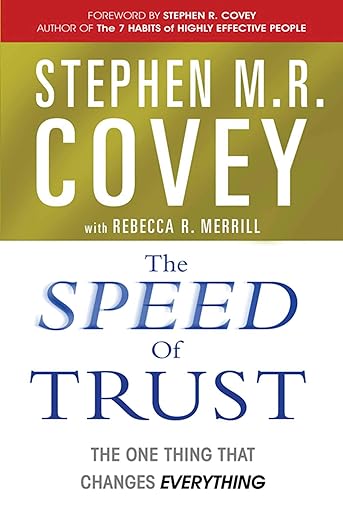
The Speed of Trust
FranklinCovey: The World's Most Trusted Leadership Company
The Speed of Trust by Stephen M. R. Covey – Book Overview
The Speed of Trust by Stephen M. R. Covey explores the idea that trust is not a soft, abstract concept, but a measurable, practical driver of performance. The book argues that trust directly affects speed and cost in organisations, relationships, and leadership. When trust is high, work moves faster and costs less. When trust is low, everything slows down and becomes more expensive.
Rather than treating trust as a personality trait or moral virtue alone, Covey positions it as a competency that can be built, lost, and rebuilt through behaviour. This framing makes the book especially relevant for leaders responsible for results, culture, and long-term performance.
The Speed of Trust is widely used in leadership development and organisational change because it provides clear language and practical tools for something many leaders sense but struggle to manage deliberately.
What Is The Speed of Trust About?
The Core Idea Explained Simply
At its core, The Speed of Trust is about the impact of trust on results. Stephen M. R. Covey explains that trust affects how quickly decisions are made, how freely people collaborate, and how much energy is lost to friction, politics, and protection.
In high-trust environments, people communicate openly, decisions are made with confidence, and teams focus on outcomes rather than self-protection. In low-trust environments, individuals spend time covering themselves, second-guessing motives, and navigating bureaucracy.
The book introduces the concept of a “trust dividend” and a “trust tax.” When trust is high, organisations benefit from a dividend in the form of speed, innovation, and engagement. When trust is low, they pay a tax through delays, duplication, micromanagement, and disengagement.
Covey challenges the assumption that trust must be earned slowly over time. While trust can be damaged quickly, he argues that it can also be built deliberately through consistent behaviour. Trust becomes predictable when leaders understand what builds it and what destroys it.
The book also reframes trust as something that begins with credibility. Credibility is built from character and competence. Leaders must demonstrate integrity, intent, capabilities, and results if they expect others to trust them.
Importantly, the book emphasises that trust is not blind. Smart trust balances judgment with openness. It avoids both cynicism and naivety, allowing leaders to move quickly while managing risk.
Overall, The Speed of Trust positions trust as a practical leadership discipline rather than a vague aspiration.
Who This Book Is For
This book is highly relevant for leaders, managers, and professionals working in environments where collaboration, decision-making, and accountability matter.
It is particularly valuable for organisations experiencing friction, silos, low engagement, or slow execution despite capable people.
Key Principles from The Speed of Trust
The Main Ideas or Frameworks
The book introduces four cores of credibility: integrity, intent, capabilities, and results. These form the foundation of personal and organisational trust.
It also outlines thirteen trust-building behaviours, including talking straight, creating transparency, delivering results, and extending trust appropriately.
These behaviours provide a practical checklist for leaders who want to increase trust deliberately rather than relying on personality or goodwill.
Why These Ideas Matter in Practice
These ideas matter because many performance problems are symptoms of low trust rather than technical failure.
In practice, improving trust reduces friction, increases accountability, and accelerates execution.
Over time, this creates more resilient and adaptive organisations.
How The Speed of Trust Applies to Business & Performance
Application in Leadership and Teams
In leadership contexts, trust determines whether people follow willingly or comply reluctantly. Leaders who model consistency, fairness, and accountability create environments where trust can grow.
This aligns closely with the standards-based leadership explored in Leaders Eat Last, where safety and trust enable performance.
Teams operating in high-trust environments are more open, more accountable, and more effective under pressure.
Application in Personal Performance and Discipline
At an individual level, trust affects credibility. Professionals who consistently deliver, communicate clearly, and act with integrity build reputational trust.
This supports sustained performance in a similar way to the consistency-driven approach described in Atomic Habits.
Over time, trusted individuals gain autonomy and influence.
Practical Examples and Real-World Application
Building Trust in a Business Environment
Organisations apply the principles of The Speed of Trust by simplifying processes, increasing transparency, and holding clear standards of behaviour.
Leaders reinforce trust by following through on commitments and addressing issues directly rather than avoiding them.
These habits reduce friction and improve execution.
Overcoming Common Trust Challenges
A common challenge is rebuilding trust after it has been damaged. Covey emphasises accountability, transparency, and consistent action.
Rebuilding trust takes effort, but avoiding it prolongs dysfunction.
Leaders must be willing to confront issues openly.
Strengths and Limitations of The Speed of Trust
What the Book Does Well
The book excels at making trust tangible. Its language and frameworks are clear and practical.
It gives leaders a way to diagnose and improve trust deliberately.
Where It May Fall Short or Need Supplementing
The book focuses heavily on behaviour rather than strategy.
Pairing it with execution-focused thinking such as Good Strategy Bad Strategy strengthens overall performance.
How The Speed of Trust Compares to Similar Books
Compared to Leaders Eat Last, this book is more prescriptive and behavioural. Compared to Extreme Ownership, it focuses more on trust than responsibility.
Why Business Coaches Recommend The Speed of Trust
Business coaches recommend this book because trust is often the hidden variable behind stalled performance.
The work supported by FranklinCovey continues to reinforce trust as a measurable leadership competency.
When trust improves, speed and accountability follow.
Should You Read The Speed of Trust?
Quick Decision Summary
This book is ideal for leaders seeking faster execution, stronger relationships, and lower friction.
It may challenge leaders who underestimate the impact of behaviour on results.
The Speed of Trust – Frequently Asked Questions
What is The Speed of Trust really about?
The book explains how trust affects speed, cost, and performance. It shows that trust is a measurable, practical factor in leadership and organisational effectiveness.
Is trust really that important in business?
Yes. Low trust creates delays, duplication, and disengagement, while high trust accelerates performance.
Can trust be rebuilt?
Yes. The book explains how trust can be rebuilt through transparency, accountability, and consistent behaviour.
Is this book practical?
Yes. It provides clear frameworks and behaviours that leaders can apply immediately.
Does the book apply to teams?
Yes. Team performance improves significantly in high-trust environments.
Is this book suitable for senior leaders?
Yes. It is particularly relevant for leaders responsible for culture and results.
The Speed of Trust – Key Takeaways
- Trust directly affects speed and cost.
- Trust is built through behaviour.
- Credibility underpins trust.
- High trust improves performance.
- Low trust creates friction.