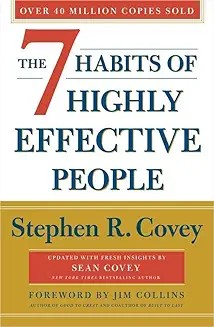


The 7 Habits of Highly Effective People
FranklinCovey: The World's Most Trusted Leadership Company
The 7 Habits of Highly Effective People by Stephen R. Covey – Book Overview
The 7 Habits of Highly Effective People by Stephen R. Covey is a foundational book on personal leadership, effectiveness, and long-term performance. Rather than offering quick tips or productivity shortcuts, the book focuses on character, principles, and disciplined behaviour as the true drivers of sustained success.
First published in 1989, the book has influenced generations of leaders, managers, and professionals across industries. Its longevity comes from its emphasis on timeless principles rather than trends. Covey argues that effectiveness is built from the inside out, starting with personal responsibility and clarity before extending to relationships and leadership.
For individuals and organisations seeking sustainable performance rather than short-term gains, The 7 Habits provides a structured framework for aligning values, behaviour, and results.
What Is The 7 Habits of Highly Effective People About?
The Core Idea Explained Simply
At its core, The 7 Habits of Highly Effective People is about effectiveness rather than efficiency. Covey defines effectiveness as achieving desired results while maintaining the capacity to produce results in the future. This distinction is critical, particularly in leadership and performance contexts where short-term output can undermine long-term capability.
The book is built on the idea that behaviour flows from character. Rather than focusing on techniques or surface-level behaviours, Covey encourages readers to examine underlying beliefs, values, and principles. Sustainable performance, he argues, is the result of aligning actions with timeless principles such as integrity, responsibility, fairness, and respect.
The seven habits themselves are presented as a progression. The first three habits focus on personal leadership and self-mastery. They encourage individuals to take responsibility for their choices, define what truly matters, and organise their actions accordingly. These habits form the foundation for personal effectiveness.
The next three habits shift focus to relationships and teamwork. They address communication, collaboration, and mutual benefit. Covey emphasises that long-term success is rarely achieved alone and that effectiveness in relationships requires empathy, trust, and shared purpose.
The final habit, “Sharpen the Saw,” focuses on renewal. Covey argues that sustained performance depends on continuous renewal across physical, mental, emotional, and spiritual dimensions. Without renewal, effectiveness deteriorates regardless of skill or effort.
Taken together, the book presents effectiveness as a disciplined, principle-based approach to life and work. It rejects shortcuts and instead promotes consistency, reflection, and long-term thinking.
Who This Book Is For
This book is relevant for leaders, managers, and professionals at all stages of their careers. It is particularly valuable for individuals who want to improve effectiveness without sacrificing integrity or wellbeing.
It is also highly applicable to organisations seeking to build strong leadership pipelines, healthy cultures, and sustainable performance rather than reactive management.
Key Principles from The 7 Habits of Highly Effective People
The Main Ideas or Frameworks
The first habit, Be Proactive, emphasises personal responsibility. Covey argues that effective people focus on what they can influence rather than reacting to circumstances. This habit establishes accountability as the foundation of performance.
Begin with the End in Mind encourages clarity of purpose. Individuals define what success looks like before taking action, ensuring alignment between values and behaviour.
Put First Things First translates purpose into disciplined execution. It focuses on prioritising important, non-urgent work rather than reacting constantly to pressure.
The remaining habits extend these principles into relationships, emphasising mutual benefit, empathetic communication, and collaboration.
Why These Ideas Matter in Practice
These ideas matter because many performance issues stem from misalignment rather than lack of effort. Without clarity, people work hard on the wrong things.
In practice, the habits create structure, consistency, and accountability. They help individuals and teams focus energy where it has the greatest long-term impact.
Over time, this disciplined approach supports sustainable performance rather than burnout.
How The 7 Habits of Highly Effective People Applies to Business & Performance
Application in Leadership and Teams
In leadership contexts, the book reinforces the importance of personal credibility. Leaders who model responsibility, clarity, and consistency set the standard for others.
This approach aligns closely with the leadership discipline explored in Good to Great, where character and consistency underpin long-term success.
Teams led with these principles tend to show stronger trust, alignment, and accountability.
Application in Personal Performance and Discipline
At an individual level, the habits provide a framework for managing time, energy, and priorities. Rather than reacting to urgency, individuals learn to focus on what truly matters.
This complements clarity-driven approaches such as High Performance: The Quiet Work That Changes Everything, where standards and structure support consistency.
The result is greater reliability and reduced overwhelm.
Practical Examples and Real-World Application
Building Habits or Skills in a Business Environment
In practice, organisations apply the habits through leadership development, decision-making frameworks, and communication standards.
Clear expectations and consistent reinforcement help embed the principles into daily behaviour.
Over time, this builds a culture of effectiveness rather than firefighting.
Overcoming Common Challenges in Practice
A common challenge is impatience. The habits require time and reflection, which can feel slow.
The book encourages commitment to long-term improvement rather than quick fixes.
This mindset supports resilience and sustained performance.
Strengths and Limitations of The 7 Habits of Highly Effective People
What the Book Does Well
The book’s greatest strength is its principle-based approach. The ideas remain relevant decades after publication.
Its structured framework provides clarity without rigidity.
Where It May Fall Short or Need Supplementing
The book is less focused on tactical execution systems.
Pairing it with execution-focused books such as Atomic Habits helps translate principles into daily behaviour.
How The 7 Habits of Highly Effective People Compares to Similar Books
Compared to Atomic Habits, The 7 Habits focuses more on character than behaviour design. Compared to Good to Great, it applies effectiveness principles at an individual level.
Why Business Coaches Recommend The 7 Habits of Highly Effective People
Business coaches recommend this book because it builds a foundation for consistent, ethical, and sustainable performance.
The principles promoted by FranklinCovey support leadership development, accountability, and long-term effectiveness.
When applied consistently, the habits improve both results and relationships.
Should You Read The 7 Habits of Highly Effective People?
Quick Decision Summary
This book is ideal for individuals and leaders seeking long-term effectiveness built on strong principles.
It may feel slow for readers seeking rapid productivity tactics.
The 7 Habits of Highly Effective People – Frequently Asked Questions
What is The 7 Habits of Highly Effective People really about?
The book explains how effectiveness is built through responsibility, clarity, and principle-based behaviour. It focuses on long-term performance rather than short-term efficiency.
Is this book relevant for modern organisations?
Yes. Its principles apply across industries and roles, particularly where leadership and trust matter.
Does the book focus on habits or values?
It focuses on habits that emerge from values and character rather than surface behaviours.
Is this book practical?
Yes. While reflective, the habits translate directly into daily decisions and behaviour.
Can individuals apply the habits without formal training?
Yes. The framework is accessible and adaptable to personal contexts.
Is this book suitable for leaders?
Yes. It is widely used in leadership development and executive coaching.
The 7 Habits of Highly Effective People – Key Takeaways
- Effectiveness is built from character.
- Clarity precedes execution.
- Responsibility drives performance.
- Relationships matter.
- Renewal sustains results.