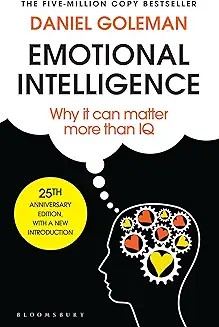


Emotional Intelligence
Daniel Goleman
Emotional Intelligence by Daniel Goleman – Book Overview
Emotional Intelligence by Daniel Goleman challenges the long-held belief that success in work and leadership is driven primarily by intellectual ability or technical expertise. Instead, the book demonstrates that how individuals understand, manage, and respond to emotions plays a decisive role in performance, decision-making, and long-term effectiveness.
Drawing on neuroscience, psychology, and organisational research, Goleman explains that emotions influence judgement, behaviour, and relationships whether they are acknowledged or not. When emotional responses go unmanaged, they often undermine clarity, consistency, and trust. When they are understood and regulated, they become a source of stability and strength.
For leaders and professionals working in complex, people-centred environments, Emotional Intelligence reframes emotional awareness as a core performance capability rather than a soft or secondary skill. It offers a practical foundation for sustainable performance built on self-awareness, discipline, and effective relationships.
What Is Emotional Intelligence About?
The Core Idea Explained Simply
The central idea of Emotional Intelligence is that success depends not only on what people know, but on how they manage themselves and interact with others. Goleman defines emotional intelligence as a set of abilities that allow individuals to recognise emotions, regulate responses, and navigate social situations effectively.
These abilities directly influence decision quality, communication, and behaviour under pressure. When emotions are unmanaged, reactions become impulsive and inconsistent. When emotions are recognised and regulated, individuals are better able to maintain clarity, composure, and focus.
The book positions emotional intelligence as a learnable, practical skill set that supports reliable performance rather than an abstract personality trait.
Who This Book Is For
- Leaders responsible for people, culture, and performance
- Managers navigating pressure, conflict, or complexity
- Professionals whose roles depend on judgement and communication
- Individuals seeking greater self-control and awareness
Key Principles from Emotional Intelligence
The Main Ideas or Frameworks
Goleman identifies five core components of emotional intelligence. The first is self-awareness, which involves recognising emotional states and understanding how they influence behaviour and decisions.
The second is self-regulation, the ability to manage emotional reactions rather than being driven by them. This supports consistency and professionalism, particularly in high-pressure situations.
Motivation forms the third component. Rather than relying on external reward, emotionally intelligent individuals sustain effort through internal standards and purpose.
The final two components are empathy and social skill. These allow individuals to understand others’ perspectives, manage relationships effectively, and influence outcomes constructively.
Why These Ideas Matter in Practice
These ideas matter because emotions are present in every decision, conversation, and interaction. Ignoring them does not remove their influence; it simply leaves them unmanaged.
In practice, emotionally intelligent individuals are better equipped to pause before reacting, communicate clearly, and maintain standards under pressure. This leads to more reliable decision-making and stronger relationships.
Over time, these behaviours compound into greater trust, credibility, and sustained performance.
How Emotional Intelligence Applies to Business & Performance
Application in Leadership and Teams
In leadership contexts, emotional intelligence directly shapes culture and standards. Leaders set the emotional tone through how they respond to pressure, handle setbacks, and communicate expectations.
Leaders with strong emotional awareness create environments where people feel safe to speak honestly, take responsibility, and perform consistently. This aligns closely with ideas explored in Leaders Eat Last, where trust and psychological safety underpin high-performing teams.
When leaders manage emotion effectively, teams experience greater clarity, stability, and accountability.
Application in Personal Performance and Discipline
At an individual level, emotional intelligence reduces reactivity. Professionals who understand their emotional triggers are less likely to derail focus or decision-making during stressful moments.
This self-awareness complements learning-focused approaches such as Mindset, where recognising internal responses supports growth rather than defensiveness.
The result is steadier performance built on awareness and discipline rather than suppression or avoidance of emotion.
Practical Examples and Real-World Application
Building Habits or Skills in a Business Environment
In everyday business environments, emotional intelligence shows up in small, repeatable behaviours. This includes listening without interruption, responding thoughtfully rather than impulsively, and delivering feedback with clarity and respect.
When leaders model these behaviours consistently, they establish clear behavioural standards without needing excessive rules or oversight.
Over time, these habits strengthen execution, reduce friction, and improve collaboration across teams.
Overcoming Common Challenges in Practice
A common challenge is confusing emotional regulation with emotional suppression. Emotional intelligence does not mean ignoring feelings; it means understanding and managing them constructively.
By recognising emotional patterns early, individuals can adjust responses before behaviour becomes reactive or unproductive.
This approach supports accountability while preserving composure and professionalism.
Strengths and Limitations of Emotional Intelligence
What the Book Does Well
The book’s greatest strength is its evidence base. Goleman presents emotional intelligence as measurable and developable, supported by research rather than opinion.
This positions emotional intelligence as a practical capability that can be improved through awareness, reflection, and deliberate practice.
Where It May Fall Short or Need Supplementing
Some readers may find the concepts less tangible without structure or execution guidance.
Pairing Emotional Intelligence with performance-focused texts such as The Effective Executive helps translate awareness into disciplined action.
How Emotional Intelligence Compares to Similar Books
Compared to Mindset, Emotional Intelligence focuses more on emotional regulation than learning orientation. Compared to Leaders Eat Last, it provides a deeper psychological explanation for trust, behaviour, and interpersonal effectiveness.
Why Business Coaches Recommend Emotional Intelligence
Business coaches recommend Emotional Intelligence because many performance breakdowns stem from unmanaged emotion rather than lack of competence.
The work of Daniel Goleman gives leaders a clear framework for improving clarity, accountability, and consistency in behaviour, particularly under pressure.
Should You Read Emotional Intelligence?
Quick Decision Summary
- Read it if you want to improve leadership presence, judgement, and interpersonal effectiveness.
- Skip it if you are seeking purely technical or task-based development.
Emotional Intelligence – Frequently Asked Questions
What is Emotional Intelligence really about?
Emotional Intelligence is about understanding how emotions influence decisions, behaviour, and relationships. The book explains how recognising and regulating emotional responses improves consistency and performance. Applied correctly, these ideas help individuals remain clear-headed and effective under pressure.
Is Emotional Intelligence important for leaders?
Yes. Leaders with emotional intelligence communicate more clearly, manage conflict constructively, and set stable behavioural standards. These capabilities directly influence trust, morale, and performance within teams.
Can emotional intelligence be learned?
Yes. The book presents emotional intelligence as a set of skills that can be developed through awareness, reflection, and practice rather than a fixed trait.
Does emotional intelligence replace technical skill?
No. Emotional intelligence complements technical ability by improving judgement, communication, and execution, especially in complex environments.
Is this book suitable for business environments?
Yes. The principles apply directly to leadership, management, and professional performance across industries.
Is Emotional Intelligence evidence-based?
Yes. The book is grounded in neuroscience and behavioural research, giving it strong credibility.
Emotional Intelligence – Key Takeaways
- Emotions strongly influence decisions and behaviour.
- Self-awareness and regulation support consistency.
- Empathy strengthens leadership and trust.
- Emotional skills are learnable and measurable.
- Sustainable performance requires emotional discipline.