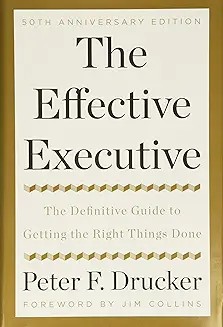


The Effective Executive
About Peter Drucker - The Drucker Institute
The Effective Executive by Peter F. Drucker – Book Overview
The Effective Executive by Peter F. Drucker is a foundational work on executive performance, responsibility, and decision-making. Rather than focusing on personality, charisma, or leadership style, the book addresses a more fundamental question: what does it actually mean to be effective in a role where decisions, priorities, and time allocation shape outcomes?
Drucker’s central argument is that effectiveness is not a natural talent or a matter of intelligence. It is a discipline that can be learned, practised, and improved. Executives succeed not because they are brilliant, but because they consistently apply a small number of sound practices that allow them to focus on what matters most.
Although first published in the 1960s, the book remains highly relevant. The pressures faced by modern leaders — complexity, overload, constant interruption, and competing priorities — make Drucker’s emphasis on clarity, focus, and contribution more important than ever.
What Is The Effective Executive About?
The Core Idea Explained Simply
At its core, The Effective Executive is about results. Peter Drucker defines effectiveness as the ability to get the right things done. This sounds simple, but Drucker shows that many capable, intelligent people fail to produce meaningful results because they focus on activity rather than contribution.
The book argues that executives are paid not for what they know, but for the impact of their decisions. Effectiveness therefore depends on how well individuals use their time, choose priorities, and translate knowledge into action. Without this discipline, even the most skilled professionals become overwhelmed or irrelevant.
Drucker introduces effectiveness as a set of five essential practices. These include managing time deliberately, focusing on contribution rather than effort, building on strengths rather than weaknesses, concentrating on a small number of key priorities, and making sound, well-considered decisions.
Crucially, Drucker does not present these practices as optional. He argues that executive roles are inherently demanding and unstructured. Without a disciplined approach, the role will consume time without producing results.
The book also challenges the idea that executives must be experts in everything. Instead, Drucker emphasises judgement, clarity, and responsibility. The effective executive understands their role, knows where they can make the greatest contribution, and structures their work accordingly.
Overall, the book reframes effectiveness as a habit of mind and behaviour rather than a function of position or authority.
Who This Book Is For
This book is written for executives, managers, and professionals whose decisions affect others. Drucker uses the term “executive” broadly, meaning anyone responsible for results, whether they manage people directly or influence outcomes through expertise.
It is particularly valuable for individuals struggling with overload, competing demands, or the sense that they are busy but not effective.
Key Principles from The Effective Executive
The Main Ideas or Frameworks
The first major principle is time management. Drucker argues that time is the scarcest resource. Effective executives do not start with tasks or plans; they start by understanding where their time actually goes.
Another key principle is contribution. Rather than asking “What should I be doing?”, effective executives ask “What contribution is expected of me?”. This shifts focus from activity to impact.
Drucker also emphasises building on strengths. Effective executives concentrate on what people do well and design roles accordingly, rather than trying to fix every weakness.
Finally, the book highlights the importance of decision-making. Effective executives make few decisions, but they make them well, focusing on what is strategic rather than routine.
Why These Ideas Matter in Practice
These ideas matter because many performance issues stem from misallocated effort. People work hard, but not on the right things.
In practice, focusing on contribution clarifies priorities, reduces overload, and improves results.
Over time, this discipline supports sustained performance and better judgement.
How The Effective Executive Applies to Business & Performance
Application in Leadership and Teams
In leadership contexts, The Effective Executive encourages leaders to focus on outcomes rather than activity. This includes setting clear expectations, defining priorities, and resisting unnecessary complexity.
This aligns closely with the disciplined focus described in The One Thing, where clarity around priorities improves execution.
Leaders who apply these principles create calmer, more focused teams that understand what truly matters.
Application in Personal Performance and Discipline
At an individual level, the book provides a framework for managing energy, attention, and responsibility. Rather than reacting to demands, individuals learn to structure their work intentionally.
This complements accountability-driven approaches such as High Performance: The Quiet Work That Changes Everything, where structure supports consistency.
The result is greater effectiveness with less wasted effort.
Practical Examples and Real-World Application
Building Habits or Skills in a Business Environment
In practice, effective executives establish routines for reviewing priorities, reflecting on results, and adjusting focus. These habits prevent drift and reactive behaviour.
By consistently asking where they can make the greatest contribution, leaders maintain relevance even as conditions change.
Over time, these habits compound into stronger performance.
Overcoming Common Challenges in Practice
A common challenge is the pressure to be constantly available. Drucker argues that effectiveness requires protecting time for thinking and decision-making.
Learning to say no to low-impact work is essential.
This discipline supports both performance and sustainability.
Strengths and Limitations of The Effective Executive
What the Book Does Well
The book’s strength lies in its clarity and discipline. Drucker avoids trends and focuses on fundamentals that remain relevant.
Its emphasis on responsibility and judgement provides a strong foundation for leadership performance.
Where It May Fall Short or Need Supplementing
The book is reflective rather than tactical. Readers seeking step-by-step productivity systems may find it demanding.
Pairing it with habit-focused books such as Atomic Habits can help translate principles into daily routines.
How The Effective Executive Compares to Similar Books
Compared to The One Thing, The Effective Executive focuses more on judgement and responsibility than prioritisation alone. Compared to Good to Great, it applies disciplined thinking at an individual rather than organisational level.
Why Business Coaches Recommend The Effective Executive
Business coaches recommend this book because it addresses the root causes of ineffective performance: lack of focus, poor judgement, and misaligned priorities.
The work of The Drucker Institute continues to reinforce the relevance of these ideas in modern leadership contexts.
When applied consistently, Drucker’s principles support calm, focused, and sustainable performance.
Should You Read The Effective Executive?
Quick Decision Summary
This book is ideal for leaders and professionals who want to improve effectiveness, judgement, and long-term contribution.
It may feel challenging for readers seeking quick productivity shortcuts.
The Effective Executive – Frequently Asked Questions
What is The Effective Executive really about?
The book explains how executives achieve results by focusing on contribution, time management, strengths, and sound decision-making. It shows that effectiveness is a discipline that can be learned.
Is The Effective Executive still relevant today?
Yes. The challenges of overload, distraction, and complexity make Drucker’s principles more relevant than ever.
Does the book focus on leadership style?
No. It focuses on behaviour and judgement rather than personality or style.
Is this book practical?
Yes, but in a reflective way. It requires thinking and discipline rather than tactics.
Who counts as an executive?
Drucker defines executives broadly as anyone responsible for results and decisions.
Is this book suitable for managers?
Yes. Managers at all levels can apply its principles to improve effectiveness.
The Effective Executive – Key Takeaways
- Effectiveness is a discipline.
- Contribution matters more than activity.
- Time is the scarcest resource.
- Strengths drive results.
- Judgement underpins performance.