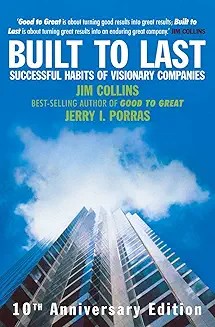


Built to Last
Jim Collins
Built to Last by Jim Collins & Jerry Porras – Book Overview
Built to Last by Jim Collins & Jerry Porras explores why some organisations endure for decades while others fade, despite early success. Rather than focusing on charismatic leaders or short-term strategies, the book examines the deep principles that allow visionary companies to sustain performance across generations.
Based on extensive research comparing visionary companies with their competitors, the book identifies patterns that consistently separate enduring organisations from those built for short-term success. These companies are not defined by a single product, leader, or idea, but by strong values, disciplined systems, and a long-term mindset.
For leaders and professionals interested in sustainable performance, Built to Last offers a powerful reminder that lasting success is created deliberately through clarity, standards, and disciplined execution over time.
What Is Built to Last About?
The Core Idea Explained Simply
The core idea of Built to Last is that great companies are built to endure, not merely to succeed quickly. Collins and Porras argue that visionary organisations prioritise long-term purpose and values over short-term profit or market conditions.
These companies preserve a strong core ideology while simultaneously stimulating progress. This balance allows them to adapt and innovate without losing their identity.
Rather than chasing trends, enduring organisations create systems and cultures that support consistency, learning, and accountability over decades.
Who This Book Is For
- Senior leaders responsible for long-term organisational direction
- Founders and business owners building for sustainability
- Executives shaping culture, values, and standards
- Professionals interested in enduring performance rather than quick wins
Key Principles from Built to Last
The Main Ideas or Frameworks
The book introduces several defining principles that underpin visionary companies. One of the most important is the concept of a core ideology, which consists of core values and core purpose that remain stable over time.
Another key idea is preserve the core, stimulate progress. Visionary companies protect their fundamental beliefs while encouraging experimentation and change in everything else.
The book also highlights the importance of alignment. Structures, systems, and behaviours must reinforce the organisation’s values rather than contradict them.
Why These Ideas Matter in Practice
These ideas matter because they create clarity and consistency. When people understand what will not change, they are more confident about what can evolve.
In practice, this reduces confusion and strengthens accountability. Decisions are guided by shared principles rather than individual preference or short-term pressure.
Over time, this approach supports sustainable performance and cultural resilience.
How Built to Last Applies to Business & Performance
Application in Leadership and Teams
For leaders, Built to Last reinforces the importance of setting clear standards and living them consistently. Values are not statements on a wall; they are behaviours demonstrated daily.
Reflecting the research of Jim Collins, the book shows that leadership effectiveness comes from discipline and alignment rather than control or charisma.
Teams perform best when expectations are clear, behaviours are consistent, and leaders model accountability over time.
Application in Personal Performance and Discipline
At an individual level, the book encourages people to think beyond short-term success and focus on long-term contribution.
Professionals who adopt this mindset build habits and standards that support consistent performance. This complements the behavioural focus found in Atomic Habits, where small actions compound over time.
The result is steadier progress built on discipline rather than intensity.
Practical Examples and Real-World Application
Building Habits or Skills in a Business Environment
Visionary companies succeed because they build systems that reinforce values. Recruitment, promotion, and performance management all reflect what the organisation truly stands for.
By embedding standards into everyday processes, leaders reduce reliance on constant oversight and enforcement.
This creates consistency across teams and strengthens execution at scale.
Overcoming Common Challenges in Practice
A common challenge is pressure to prioritise short-term results over long-term health. Built to Last highlights how this trade-off undermines sustainability.
By maintaining clarity around core values, leaders can make decisions that balance immediate demands with long-term integrity.
This discipline helps organisations navigate change without losing direction.
Strengths and Limitations of Built to Last
What the Book Does Well
The book’s greatest strength is its research depth. The principles are supported by long-term data rather than anecdote.
Its focus on values, alignment, and discipline provides a strong foundation for leaders committed to sustainable performance.
Where It May Fall Short or Need Supplementing
Some examples are drawn from large, established organisations, which may feel distant to smaller or younger businesses.
Pairing the book with more tactical leadership texts can help translate principles into day-to-day action.
How Built to Last Compares to Similar Books
Compared to Good to Great, Built to Last focuses more on enduring values and purpose than on performance transformation. Together, the two books provide a complementary view of sustainability and execution.
Why Business Coaches Recommend Built to Last
Business coaches recommend Built to Last because it reframes success as a long-term responsibility. Leaders are encouraged to think beyond quarterly results and focus on the systems that sustain performance.
This mindset supports clarity, accountability, and consistency, all of which are essential for enduring success.
Should You Read Built to Last?
Quick Decision Summary
- Read it if you want to build a business or career that endures over time.
- Skip it if you are looking for short-term tactics or quick wins.
Built to Last – Frequently Asked Questions
What is Built to Last really about?
Built to Last explains why some organisations endure for decades while others decline. It focuses on values, purpose, and disciplined systems rather than individual leaders or market conditions. Applied correctly, the ideas help organisations build sustainable performance and cultural resilience.
Is Built to Last relevant for modern businesses?
Yes. Although some examples are historical, the principles around values, alignment, and long-term thinking remain highly relevant. Modern organisations still require clarity and discipline to sustain performance.
Does the book focus on leadership or strategy?
The book focuses more on leadership philosophy and organisational culture than on traditional strategy. It explains how values and systems shape long-term outcomes.
Can smaller businesses apply these ideas?
Yes. While examples often involve large companies, the principles scale well. Small businesses benefit greatly from clarity, standards, and disciplined execution.
How does Built to Last differ from Good to Great?
Built to Last examines enduring values, while Good to Great focuses on performance transformation. Together, they provide a full picture of sustainable success.
Is Built to Last evidence-based?
Yes. The book is grounded in extensive comparative research across multiple decades, giving it strong credibility.
Built to Last – Key Takeaways
- Enduring organisations preserve core values while adapting execution.
- Clarity and alignment drive long-term performance.
- Discipline matters more than charisma.
- Systems reinforce standards and accountability.
- Sustainable success is built deliberately over time.