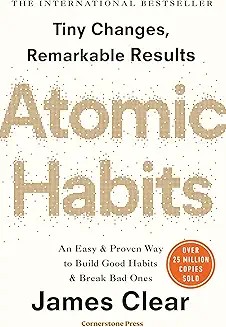


Atomic Habits
James Clear
Atomic Habits by James Clear – Book Overview
Atomic Habits by James Clear is a practical exploration of how small, consistent actions shape long-term outcomes in work, leadership, and personal performance. Rather than promoting dramatic change or reliance on motivation, the book focuses on systems, environments, and identity as the foundations of sustainable improvement. It explains how tiny behaviours, repeated daily, compound into meaningful results over time.
The central premise is that success is not the result of sudden breakthroughs, but of consistent execution of simple actions. Clear draws on behavioural psychology, neuroscience, and real-world examples to explain how habits are formed and why they persist. This makes the book especially relevant for professionals seeking reliable ways to improve performance without burnout or constant self-discipline.
Because of its clarity and practicality, Atomic Habits is frequently recommended in leadership, coaching, and performance settings. Its frameworks translate easily into business environments where consistency, standards, and accountability matter more than short bursts of effort.
What Is Atomic Habits About?
The Core Idea Explained Simply
The core idea of Atomic Habits is that lasting change comes from small actions performed consistently over time. James Clear describes habits as the compound interest of self-improvement. Just as small financial investments grow significantly through compounding, small behavioural changes accumulate into powerful long-term results.
Rather than encouraging people to set ambitious goals and rely on willpower, the book shifts focus to systems. Goals provide direction, but systems determine progress. By improving the processes that shape daily behaviour, outcomes improve naturally without constant effort.
This reframing encourages patience and discipline. Success becomes something built quietly through repetition, not something achieved through intensity or short-term motivation.
Who This Book Is For
- Business leaders seeking consistent performance rather than peaks and troughs
- Professionals wanting better focus, discipline, and follow-through
- Teams aiming to build reliable habits that support high standards
- Individuals struggling to maintain good habits over time
Key Principles from Atomic Habits
The Main Ideas or Frameworks
Atomic Habits is structured around four laws of behaviour change. These laws provide a simple framework for building good habits and reducing unwanted ones.
- Make it obvious – Design environments so desired behaviours are visible and easy to notice.
- Make it attractive – Increase motivation by linking habits to positive feelings or rewards.
- Make it easy – Reduce friction so habits require minimal effort to perform.
- Make it satisfying – Reinforce habits with immediate feedback or reward.
Each law targets a different stage of habit formation. Together, they form a repeatable system that can be applied across personal and professional contexts.
Why These Ideas Matter in Practice
These ideas matter because they reduce dependence on motivation. Motivation is unreliable, but systems are stable. By designing environments and routines that support the right behaviour, consistency becomes easier to sustain.
In business, this often means improving workflows, simplifying processes, and reinforcing small behaviours that support larger objectives. Over time, these improvements raise performance standards without increasing pressure.
This focus on systems aligns closely with sustainable performance, where reliability matters more than intensity.
How Atomic Habits Applies to Business & Performance
Application in Leadership and Teams
In leadership settings, Atomic Habits highlights how culture is shaped by repeated behaviours rather than stated values. How meetings are run, how feedback is delivered, and what behaviours are reinforced all signal what truly matters.
Leaders who apply habit principles focus on designing environments that encourage the right actions. This may include simplifying decision-making, removing obstacles, or reinforcing accountability through consistent routines. Much of this thinking aligns with ideas shared by James Clear himself, particularly around environment design as a leadership responsibility.
Over time, these small changes influence team norms more effectively than one-off initiatives or motivational programmes. Similar ideas appear in The 7 Habits of Highly Effective People, which also emphasises disciplined behaviour over intention alone.
Application in Personal Performance and Discipline
At an individual level, the book reframes discipline as a design challenge rather than a personal failing. When habits are aligned with identity and supported by environment, consistency becomes far easier to maintain.
Many professionals struggle with focus or follow-through because their systems work against them. Atomic Habits offers a framework for redesigning daily routines to support energy, clarity, and execution.
This approach complements ideas found in Deep Work, where environment and structure play a central role in sustained concentration.
Practical Examples and Real-World Application
Building Habits or Skills in a Business Environment
In a business context, habit-building often begins with small operational changes. Standardising how tasks are handed over, how meetings start, or how priorities are reviewed can improve consistency without adding complexity.
By making desired behaviours obvious and easy, teams are more likely to follow them consistently. This reduces friction and supports clearer accountability.
Over time, these incremental improvements compound into stronger execution and higher performance standards, echoing principles also explored in The Compound Effect.
Overcoming Common Challenges in Practice
A common challenge is impatience. Small changes may feel insignificant at first, leading people to abandon them prematurely. Atomic Habits emphasises progress over perfection and patience over intensity.
Another challenge is inconsistency. By focusing on identity and environment rather than motivation, individuals can maintain habits even when energy is low or circumstances change.
This perspective helps maintain momentum and accountability during periods where results are not immediately visible.
Strengths and Limitations of Atomic Habits
What the Book Does Well
The book excels in clarity and structure. Complex behavioural science is translated into practical language without oversimplifying the concepts.
The identity-based approach is particularly effective, helping readers understand that lasting change requires seeing themselves differently, not just acting differently.
Where It May Fall Short or Need Supplementing
Atomic Habits focuses primarily on individual and behavioural change. It does not deeply explore organisational strategy, leadership vision, or long-term business direction.
Readers seeking broader strategic context may benefit from pairing it with leadership or strategy-focused books.
How Atomic Habits Compares to Similar Books
Compared to The 7 Habits of Highly Effective People, Atomic Habits is more tactical and behaviour-focused. Compared to Deep Work, it applies habit principles across a wider range of behaviours beyond focus alone.
Why Business Coaches Recommend Atomic Habits
Business coaches often recommend Atomic Habits because understanding alone does not change behaviour. Sustainable improvement comes from translating insight into action.
For leaders and professionals evaluating Atomic Habits by James Clear, the book offers a practical foundation for clarity, consistency, and accountability in performance.
Should You Read Atomic Habits?
Quick Decision Summary
- Read it if you want practical tools to build consistent habits and sustainable performance.
- Skip it if you are looking only for high-level strategy without behavioural detail.
Atomic Habits – Frequently Asked Questions
What is Atomic Habits really about?
Atomic Habits is about building lasting change through small, repeatable behaviours rather than dramatic transformation. The book explains how habits compound over time and why systems and environment matter more than motivation. In practice, this helps individuals and teams focus on consistency and process instead of relying on short bursts of effort or willpower.
Is Atomic Habits useful for business leaders?
Yes. Business leaders use Atomic Habits to shape behaviour, culture, and performance. The principles help leaders understand how everyday actions influence standards and expectations. Applied consistently, the ideas support stronger accountability, clearer routines, and more reliable performance across teams.
What makes Atomic Habits different from other habit books?
The book stands out because of its focus on systems and identity rather than motivation alone. Instead of telling people to try harder, it explains how to design environments that make good habits easier and bad habits harder. This makes the ideas easier to apply in real working environments.
Can Atomic Habits help break bad habits?
Yes. The book explains how reversing the four laws of behaviour change makes unwanted habits less obvious, less attractive, harder to perform, and less satisfying. In practice, this helps individuals reduce reliance on willpower and build more sustainable behavioural change.
Is Atomic Habits suitable for beginners?
Atomic Habits is suitable for beginners because it avoids jargon and explains concepts clearly. The examples are practical and relatable, making it easy for readers to apply the ideas immediately. This accessibility is one reason the book is widely recommended.
Is Atomic Habits evidence-based?
Yes. The book draws on behavioural science, psychology, and real-world case studies. While it remains practical and readable, the ideas are grounded in research, making them credible for both personal development and business performance contexts.
Atomic Habits – Key Takeaways
- Small habits compound into significant long-term results.
- Systems matter more than goals for sustained success.
- Identity shapes behaviour more than motivation.
- Environment strongly influences consistency.
- Sustainable performance is built through repetition.